
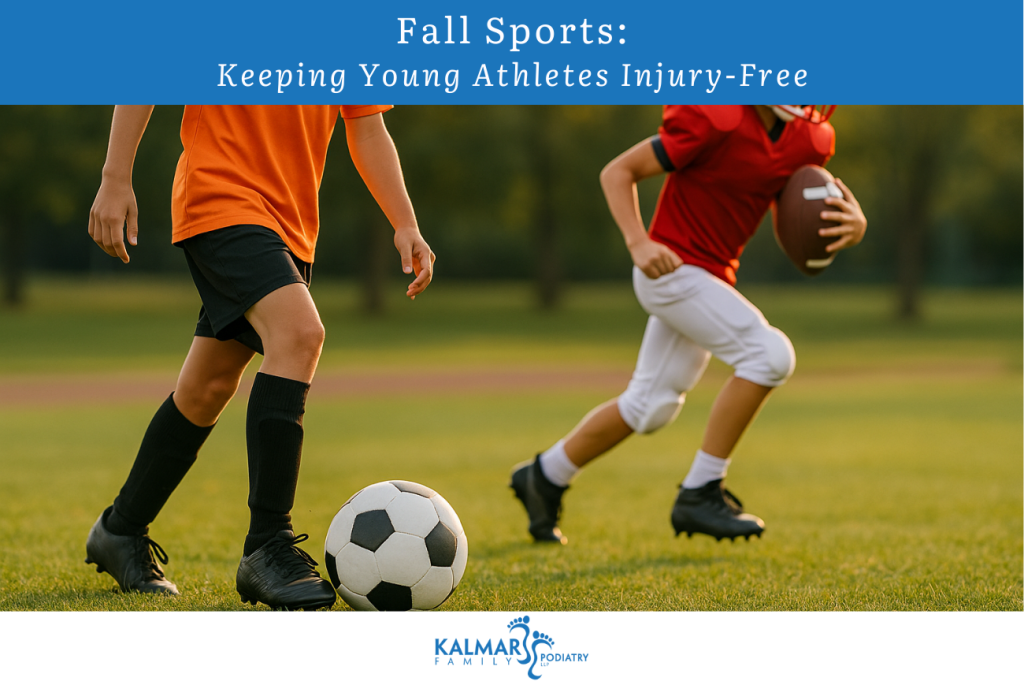
As the crisp autumn air arrives, so do fall sports—soccer, football, cross-country, and more. While these activities help kids stay fit and build teamwork skills, the season also brings an increased risk of foot and ankle injuries. Kalmar Family Podiatry shares practical tips to keep your young athlete’s feet healthy and pain-free all season long.
Common Fall Sports Foot & Ankle Risks
- Ankle Sprains: Quick pivots on uneven fields can stretch or tear ligaments.
- Heel Pain (Sever’s Disease): Rapid growth and intense practices can inflame the growth plate.
- Stress Fractures: Repetitive impact on hard surfaces may cause small bone cracks.
- Turf Toe: Hyperextension injuries from artificial turf or sudden stops.
- Blisters & Nail Issues: Ill-fitting cleats or damp socks create friction and infection risks.
Injury Prevention Tips for Parents & Coaches
- Proper Footwear: Invest in sport-specific shoes that fit well and offer good arch support.
- Warm-Up & Stretching: Encourage dynamic stretches before practice and games.
- Gradual Training: Increase activity intensity slowly to avoid overuse injuries.
- Field Awareness: Inspect playing surfaces for holes, rocks, or slippery leaves.
- Rest & Recovery: Schedule rest days and monitor for lingering soreness.
When to See a Podiatrist
Persistent pain, swelling, or difficulty bearing weight after 24–48 hours warrants a professional evaluation. Early treatment can prevent minor injuries from becoming season-ending problems.
Q&A: Your Fall Sports Foot Health Questions Answered
Q: How can I tell if my child’s ankle sprain is serious?
A: If there’s significant swelling, bruising, or inability to put weight on the foot, seek medical care. An X-ray may be needed to rule out a fracture.
Q: Should my child use custom orthotics?
A: Children with flat feet, recurring pain, or a history of injuries may benefit. A podiatrist can evaluate and prescribe orthotics if appropriate.
Q: Are high-top cleats safer than low-tops?
A: High-tops can provide extra ankle support but proper fit and good conditioning are equally important.
Q: What’s the best way to manage blisters?
A: Keep the area clean, apply a protective bandage, and change damp socks quickly. Avoid popping blisters unless advised by a healthcare provider.
Q: How soon can my child return to play after an injury?
A: Only after pain is gone and range of motion and strength are fully restored. Follow your podiatrist’s guidance to prevent re-injury.
Contact Kalmar Family Podiatry
Kalmar Family Podiatry
📍 Address: 62 Green Street, Huntington, NY, 11743
📞 Phone: (631) 549-0955
🌐 Website: kalmarfamilypodiatry.com
Protect your young athlete’s feet this fall. Schedule an appointment today for a comprehensive evaluation and expert care.