
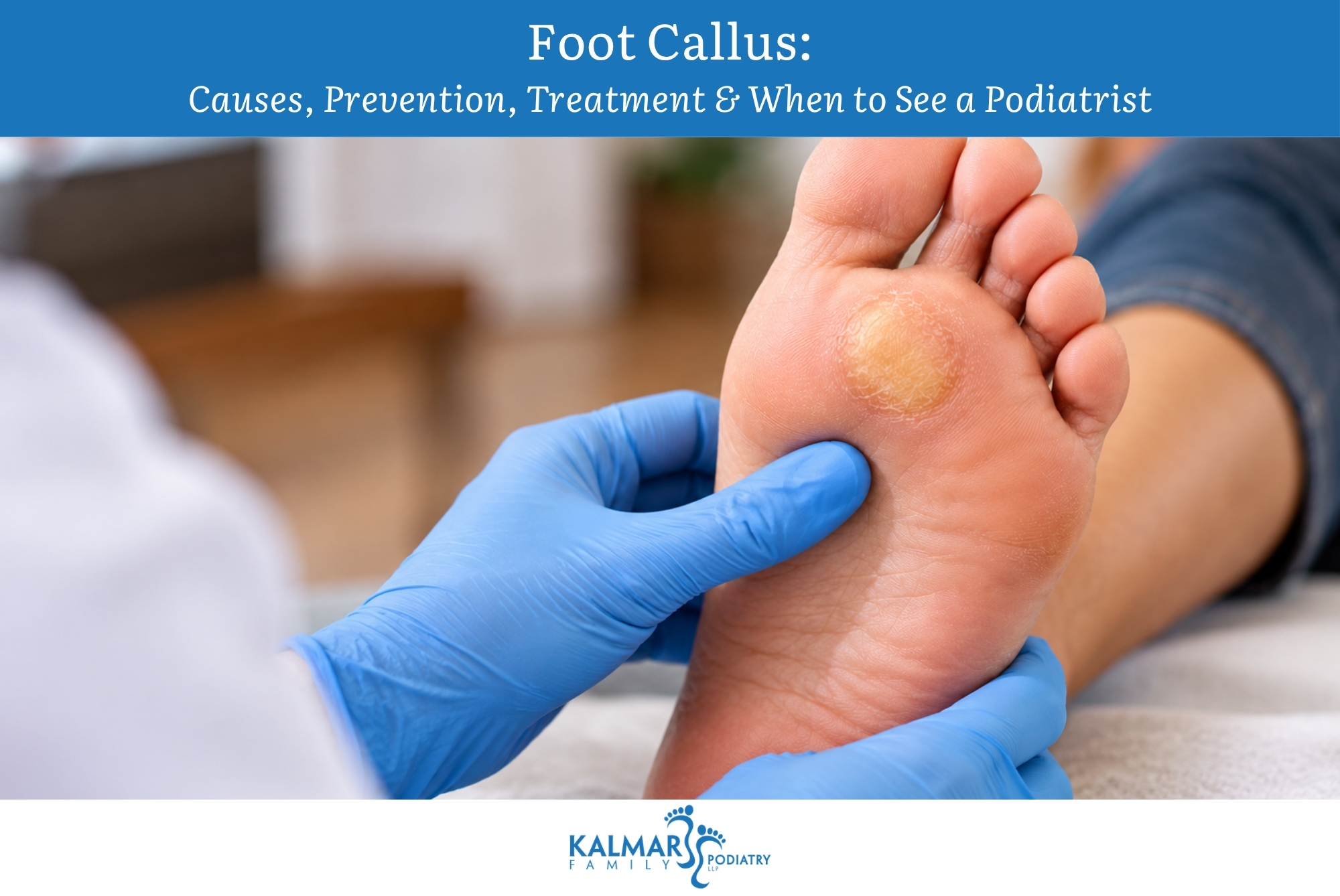
A foot callus is an area of thickened, hardened skin that develops when repeated pressure or friction causes the skin to protect itself. Calluses commonly form on the heels, balls of the feet, and other areas that experience increased pressure while walking or standing.
Most foot calluses are harmless and may not cause any symptoms. However, a thick or painful callus can make walking uncomfortable and may be a sign that excessive pressure is being placed on a particular area of the foot. Calluses also deserve special attention in people with diabetes, nerve damage, or poor circulation because even minor foot problems can become more serious.
The key to preventing a recurring foot callus is understanding why it developed in the first place. Changing footwear, reducing friction, improving cushioning, and addressing underlying foot or gait problems can often prevent calluses from coming back.
If you have a painful, recurring, or unusually thick callus, a podiatrist can determine what is causing it and recommend appropriate treatment.
What Is a Foot Callus?
A callus is a thickened layer of skin that develops in response to repeated pressure or friction. This thickening is the body’s natural attempt to protect the tissues underneath.
Calluses are usually:
- Broad rather than sharply defined
- Thick, rough, or hardened
- Yellowish or grayish in appearance
- Located on areas that bear weight or experience friction
- Most common on the heel, ball of the foot, or edges of the toes
A callus may not hurt at first. As it becomes thicker, however, it can cause tenderness, burning, or discomfort when standing or walking.
A recurring callus in exactly the same location may indicate that excessive pressure is repeatedly being placed on that part of the foot.
Callus vs. Corn: What’s the Difference?
Calluses and corns are often confused because both are caused by friction and pressure. However, they typically look and feel different.
If you aren’t sure whether a skin lesion is a callus, corn, wart, or another condition, a podiatrist can provide an accurate diagnosis.
What Causes Foot Calluses?
Foot calluses develop when an area of skin is repeatedly exposed to pressure or friction. Several factors can contribute.
- Poorly Fitting Shoes
Improper footwear is one of the most common causes of foot calluses.
Look for shoes that:
- Have adequate room for your toes
- Do not squeeze the sides of your feet
- Fit securely around the heel
- Provide appropriate cushioning
- Do not create rubbing or pressure points
Your feet can change in size and shape over time, so a shoe size that worked years ago may no longer be the right fit.
- Repeated Walking or Standing
Spending many hours on your feet can increase pressure on the heels and balls of the feet.
People who work in occupations that require prolonged standing or walking—including nurses, doctors, retail employees, teachers, restaurant workers, and construction professionals—may be more susceptible to calluses.
Supportive footwear and appropriate cushioning like over-the-counter orthotics or custom orthotics can help reduce the amount of stress placed on the feet throughout the day.
- Running and Other High-Impact Activities
Running, sports, and other repetitive activities can expose certain areas of the foot to thousands of repeated impacts.
A change in training, running surface, footwear, or walking mechanics can alter where pressure is concentrated and lead to a new callus.
If a callus develops after increasing your activity level or repeatedly appears in one location, it may be worth having your foot mechanics evaluated.
- Foot Shape and Structural Problems
The way your feet are structured can affect how pressure is distributed when you walk.
Conditions such as:
- Bunions
- Hammertoes
- High arches
- Flat feet
- Prominent bones
- Other foot deformities
can create areas of concentrated pressure and friction.
For example, a bunion can increase rubbing along the inside of the big toe joint, while a hammertoe can cause pressure over the top of a bent toe.
If a callus continually returns despite changing your shoes and caring for your skin, an underlying structural or biomechanical problem may be contributing to it.
How to Prevent Foot Calluses
Preventing a foot callus is generally easier than repeatedly removing one. The most effective strategy is to reduce the pressure and friction that caused it.
Choose Properly Fitting Shoes
Wear shoes that accommodate the natural shape of your feet.
Your toes should have enough room to move without being compressed. The shoe should also hold your heel securely without excessive rubbing.
Avoid consistently wearing shoes that cause pain, pressure, or friction.
Wear Supportive, Cushioned Footwear
Shoes with adequate cushioning can reduce impact and pressure on the heels and balls of the feet.
If your foot structure or walking mechanics are contributing to excessive pressure, a podiatrist may recommend an orthotic device to help redistribute pressure more effectively.
Keep Your Feet Moisturized
Applying a quality foot moisturizer regularly can help prevent excessively dry, rough skin.
For particularly dry or thick skin, your podiatrist may recommend a moisturizer containing ingredients such as urea.
Do not apply moisturizer between the toes unless specifically instructed to do so.
Address Underlying Foot Problems
If you repeatedly develop a callus in the same location, don’t focus only on removing the hardened skin.
The callus may be a visible sign of an underlying problem involving your foot structure, footwear, gait, or pressure distribution.
A podiatric evaluation can help identify the source of the problem and determine whether treatments such as orthotics, footwear modifications, or other interventions may help.
When Should You See a Podiatrist for a Callus?
Many calluses do not require professional treatment. However, you should consider seeing a podiatrist if your callus:
- Causes significant pain
- Makes walking or standing uncomfortable
- Continues to return
- Becomes increasingly thick
- Cracks or bleeds
- Becomes red, swollen, or painful
- Develops drainage or other signs of infection
- Does not improve with appropriate footwear and basic foot care
- Is accompanied by another concerning change in your foot
You should also seek professional foot care if you have diabetes, peripheral neuropathy, poor circulation, or another condition that increases your risk of foot complications.
How Does a Podiatrist Treat a Foot Callus?
Treatment depends on what is causing the callus and whether there are other underlying foot problems.
A podiatrist may carefully remove excess thickened skin using sterile instruments. This is called debridement.
Your podiatrist may also recommend:
- Footwear changes
- Protective padding
- Moisturizing treatments
- Orthotics
- Treatment for bunions or hammertoes
- Evaluation of your walking mechanics
- Other treatments to address the underlying cause
The goal isn’t simply to make the callus disappear.
The goal is to reduce the pressure or friction that caused it.
That approach can help reduce the likelihood that the callus will return.
Frequently Asked Questions About Foot Calluses
What is the fastest way to get rid of a foot callus?
There is no safe way to instantly remove a callus at home. For a mild callus, gentle filing after soaking and regular moisturizing may gradually reduce the thickened skin. A podiatrist can safely debride a painful or excessively thick callus and determine why it developed.
Are foot calluses normal?
Yes. Calluses are a common protective response to repeated pressure and friction. However, a painful, rapidly changing, recurring, or unusually thick callus should be evaluated by a podiatrist.
Should I cut off a foot callus?
No. Cutting or shaving a callus at home can cause bleeding, infection, and injury to healthy tissue. This is particularly dangerous for people with diabetes, neuropathy, or circulation problems.
Why do I have a callus on the bottom of my foot?
A callus on the bottom of the foot usually develops because that area is exposed to repeated pressure or friction. Foot structure, footwear, activity level, and walking mechanics can all contribute.
Can shoes cause foot calluses?
Yes. Shoes that are too tight, too loose, poorly cushioned, or poorly shaped for your feet can increase pressure and friction and contribute to calluses.
Are calluses a sign of a foot problem?
Not necessarily. However, a callus that repeatedly develops in exactly the same location may indicate an underlying issue with foot structure, gait, footwear, or pressure distribution.
Can I use a callus remover if I have diabetes?
People with diabetes should not attempt aggressive callus removal without guidance from a healthcare professional. Reduced sensation and circulation problems can make seemingly minor injuries more difficult to detect and heal.
When should I see a podiatrist for a callus?
See a podiatrist if the callus is painful, repeatedly returns, cracks or bleeds, shows signs of infection, interferes with walking, or does not improve with appropriate foot care. People with diabetes, neuropathy, or circulation problems should have foot changes evaluated professionally.
Healthy Feet Start with Understanding the Cause
A foot callus is usually more than just a patch of hard skin. It is your body’s response to repeated pressure or friction.
While occasional calluses may be manageable with proper footwear and routine foot care, a painful or recurring callus deserves attention to the underlying cause.
At Kalmar Family Podiatry, our goal is to look beyond the callus itself and determine why it developed. Depending on your individual needs, treatment may include professional callus care, footwear recommendations, padding, orthotics, or evaluation and treatment of an underlying foot condition.
If you have a painful or recurring foot callus, or you’re concerned about a change in your foot, schedule an evaluation with Kalmar Family Podiatry in Huntington, New York.
Don’t just keep removing the callus. Find out why it’s there.
About Kalmar Family Podiatry
Kalmar Family Podiatry provides comprehensive podiatric care for patients and families in Huntington and the surrounding Long Island communities. Our practice treats a wide range of foot and ankle conditions and provides individualized care designed to keep you active and your feet healthy.
Ready to address a painful or recurring foot callus? Contact Kalmar Family Podiatry to schedule an appointment.