
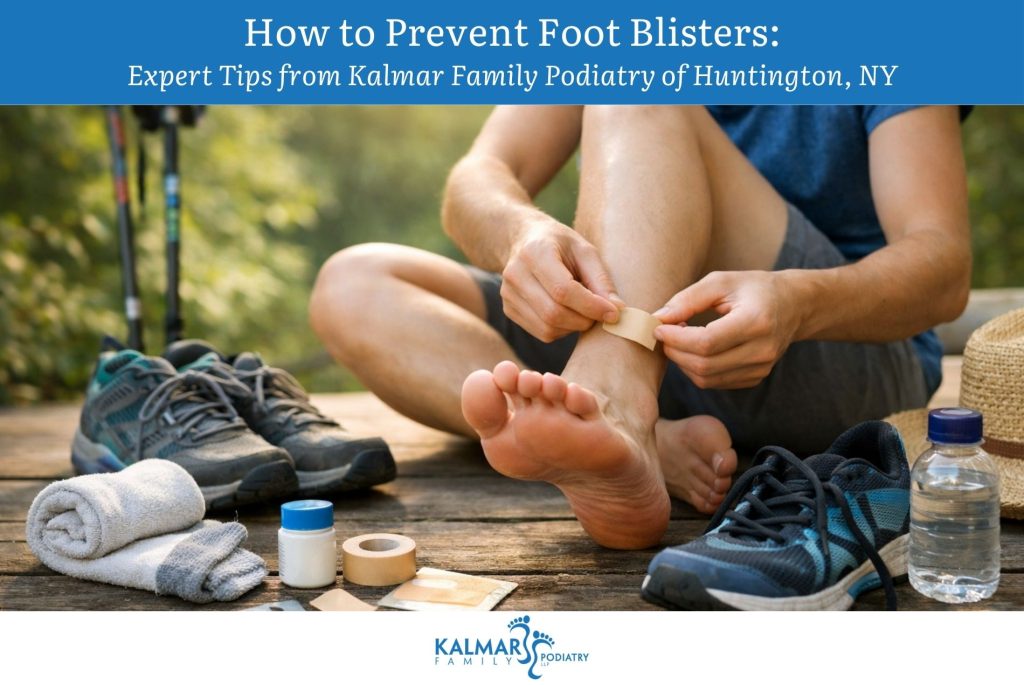
Blisters are one of the most common foot complaints I see in my practice—and fortunately, they’re also one of the most preventable. Whether you’re an athlete, on your feet all day at work, or simply enjoy staying active, a few simple strategies can significantly reduce your risk.
Start with Prevention
Choose the right footwear
Shoes should fit properly from day one—no “break-in” period should involve pain or friction. Look for supportive footwear with adequate cushioning, a secure heel fit, and enough room in the toe box to avoid rubbing.
Make daily foot checks a habit
Early signs of irritation—redness, warmth, or tenderness—are often precursors to blister formation. Catching these early allows you to adjust footwear or activity before a blister develops.
Socks: Your First Line of Defense
Many people underestimate the role socks play in blister prevention. In reality, socks act as the critical interface between your skin and your shoes. A well-designed sock should:
- Hug the heel to prevent slipping
- Maintain its shape throughout wear
- Provide adequate room in the toe area without bunching
A poor sock choice can increase friction and moisture—two key contributors to blister formation.
Understanding Sock Materials
Not all socks are created equal. The material matters more than most people realize:
Natural fibers
- Wool is highly effective at managing moisture and can hold a significant amount without feeling wet.
- Mohair helps regulate temperature, keeping feet cool in warm weather and insulated in colder conditions.
- Cotton, while common, tends to retain moisture, which can increase blister risk.
Synthetic fibers
- Materials like acrylic, polyester, and polypropylene are designed to repel water and dry quickly.
- They maintain their structure well and continue to provide cushioning even when damp.
Moisture-wicking fabrics
- Advanced blends such as COOLMAX® are engineered to pull moisture away from the skin, helping keep feet dry during prolonged activity.
Specialty fibers
- Newer technologies, including bioceramic fiber blends, may help reduce friction and limit bacterial growth, offering an added layer of protection.
The Bottom Line
Blister prevention comes down to minimizing friction and controlling moisture. With proper footwear, consistent foot monitoring, and thoughtful sock selection, most blisters can be avoided entirely.
If you’re experiencing recurrent blisters, it may be a sign of an underlying biomechanical issue or improper footwear—and that’s something worth addressing early.
Kalmar Family Podiatry: Huntington, New York; Greenlawn, New York; Commack, New York; Dix Hills, New York; Huntington Station, New York; Elwood, New York; Cold Spring Harbor, New York; Syosset, New York