
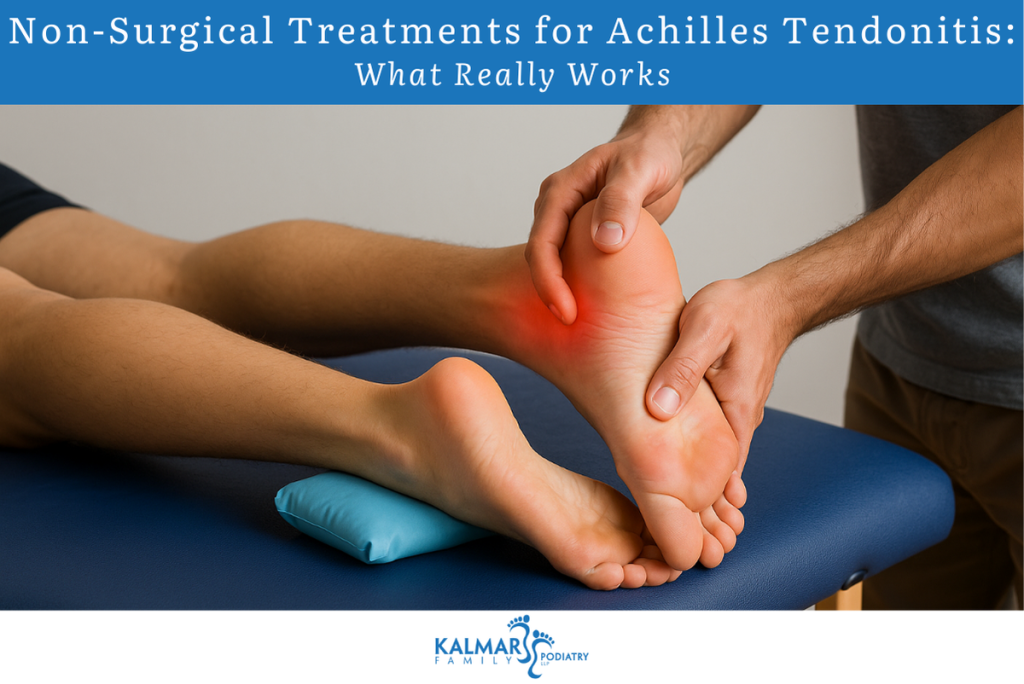
Understanding Achilles Tendonitis
The Achilles tendon is the largest tendon in your body, connecting your calf muscles to your heel bone. Overuse, sudden increases in activity, or poor footwear can cause tiny tears and inflammation, leading to Achilles tendonitis. Symptoms include pain or stiffness along the back of the leg near the heel, especially in the morning or after activity.
Effective Non-Surgical Treatments
1. Rest & Activity Modification
Taking a break from high-impact activities like running or jumping gives the tendon time to heal. Low-impact exercises such as swimming or cycling are excellent alternatives.
2. Ice Therapy
Applying ice packs for 15–20 minutes several times a day reduces inflammation and pain.
3. Physical Therapy
A podiatrist-guided physical therapy program focuses on eccentric strengthening (slowly lowering the heel below the toes) and stretching the calf muscles.
4. Supportive Footwear & Orthotics
Wearing shoes with proper heel cushioning and arch support or using custom orthotics can reduce strain on the tendon.
5. Night Splints & Heel Lifts
Night splints keep the foot in a flexed position to stretch the tendon overnight, while small heel lifts decrease tension during the day.
6. Anti-Inflammatory Medications
Non-steroidal anti-inflammatory drugs (NSAIDs), as recommended by a healthcare provider, can help manage pain and swelling.
7. Shockwave Therapy (ESWT)
For persistent cases, extracorporeal shockwave therapy stimulates healing without surgery.
Preventing Recurrence
- Warm up and stretch before physical activity.
- Increase training intensity gradually.
- Wear supportive shoes and replace worn-out footwear.
- Cross-train with low-impact activities.
Comprehensive Q&A
Q: How long does it take for Achilles tendonitis to heal without surgery?
A: Most patients improve within 6–12 weeks with consistent non-surgical care, though chronic cases may take longer.
Q: Can I continue running while treating Achilles tendonitis?
A: It’s best to pause high-impact running until cleared by your podiatrist. Low-impact activities like swimming or cycling are safer options.
Q: Are cortisone injections recommended?
A: Cortisone is typically avoided near the Achilles tendon because it can weaken the tissue and increase the risk of rupture.
Q: When should I consider surgery?
A: Surgery is usually only considered after at least six months of failed conservative treatments.
Q: Will custom orthotics really help?
A: Yes, orthotics can correct biomechanical issues and reduce stress on the Achilles tendon, aiding recovery and prevention.
Contact Kalmar Family Podiatry
Kalmar Family Podiatry
📍 Address: 62 Green Street, Huntington, NY, 11743
📞 Phone: (631) 549-0955
🌐 Website: kalmarfamilypodiatry.com
Whether you’re a runner, weekend warrior, or simply experiencing heel pain, the specialists at Kalmar Family Podiatry can create a personalized non-surgical treatment plan to get you back on your feet.